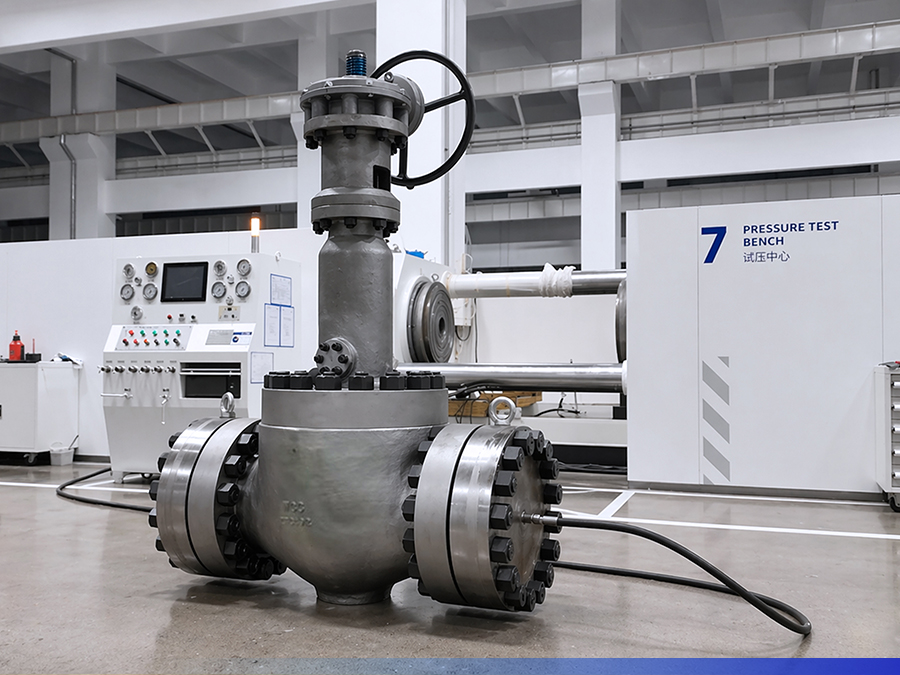
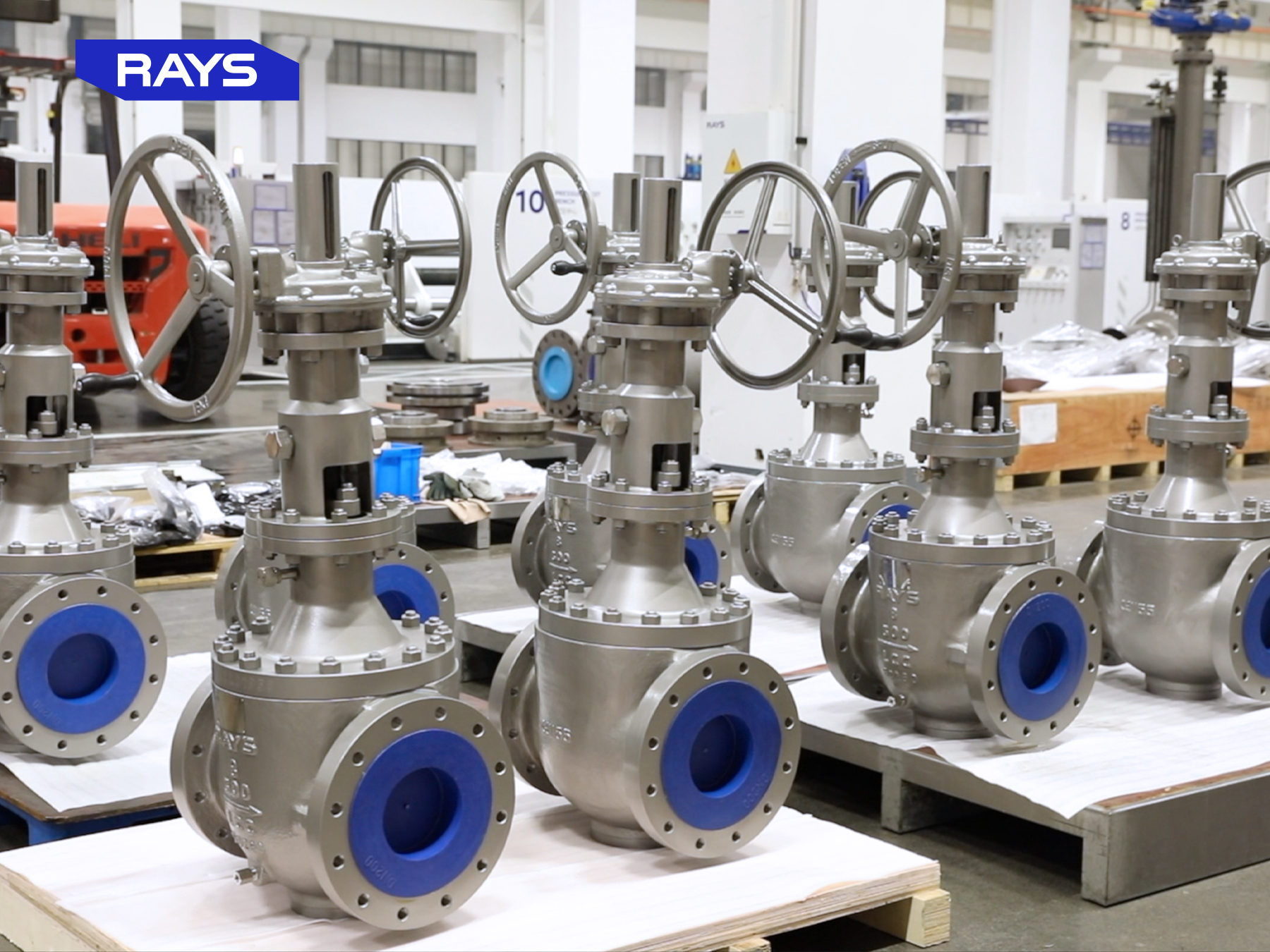
Recently, RAYS has completed the manufacturing and delivery of top-entry rising stem ball valves for an offshore gas field project (CNOOC Zhanjiang) and a petrochemical plant in Poland. The petrochemical project achieved batch deployment of 54 units.
Project 1 | CNOOC Offshore Gas Field Application
In a gas field project operated by CNOOC Zhanjiang Branch, RAYS rising stem ball valves are used for high-pressure natural gas transmission (12" / Class 1500).
Under this service condition, valves are required to withstand high pressure combined with frequent operation, placing strong demands on sealing stability and mechanical reliability.
Project 2 | Poland Petrochemical Application
In a petrochemical plant in Poland, RAYS rising stem ball valves have been deployed in batch (54 units), serving media including vinyl chloride (VCM), dichloroethane (EDC), and HCl (2–8" / Class 300).
In this project, RAYS valves were selected to replace existing Cameron ORBIT rising stem ball valves in the pipeline system. While meeting the same performance requirements, the solution provided advantages in delivery time and overall cost.
Although the two projects operate under different service conditions, they exhibit a similar underlying mechanism during operation: frequent cycling subjects the sealing interface to continuous variations in load and contact state, while environmental factors further accelerate interface degradation.
Under such conditions, the key question is no longer whether sealing can be achieved, but:
whether sealing performance can remain stable over long-term cyclic operation.
|
In these scenarios, sealing degradation is not driven by a single factor, but by the continuous evolution of contact conditions at the interface.
In conventional ball valves, the sealing surfaces remain in contact throughout the entire open–close cycle. When high pressure, frequent operation, and aggressive media are combined, the effect of “contact + relative motion” continuously acts on the sealing interface:
Microscopic wear progressively alters the sealing surface
Corrosive media accelerate material degradation
Cyclic loading leads to gradual deviation of sealing contact stress
As a result, sealing failure is rarely a sudden event — it is a progressive outcome formed during operation.
|
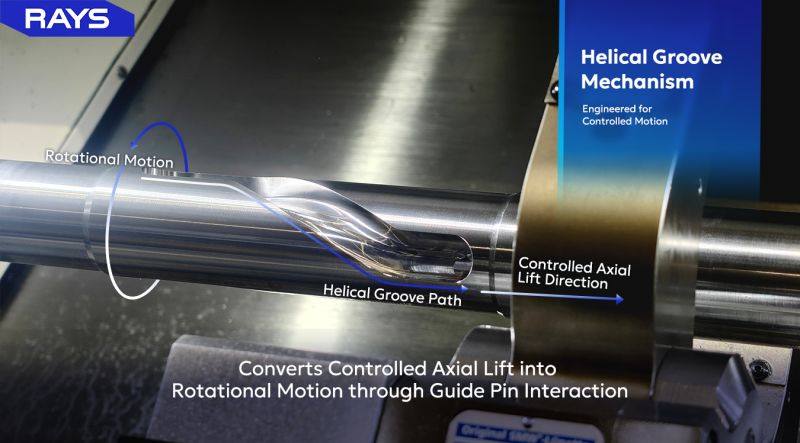
To address the above challenges, RAYS adopts a top-entry rising stem ball valve design, transforming the ball movement from conventional “rotation under continuous contact” into a track-guided motion with separated contact phases:
Initial opening/closing stage: the ball lifts axially away from the seat, eliminating contact
Intermediate stage: the 90° rotation is completed under a no-contact condition
Final closing stage: sealing is achieved through controlled mechanical loading
This approach converts the traditional continuous contact during operation into a phase-controlled contact mechanism, fundamentally reducing the conditions that lead to wear from a structural standpoint.
|
Across both projects, the valves demonstrate consistent operational behavior:
Reduced wear during repeated operation
Stable sealing performance over time
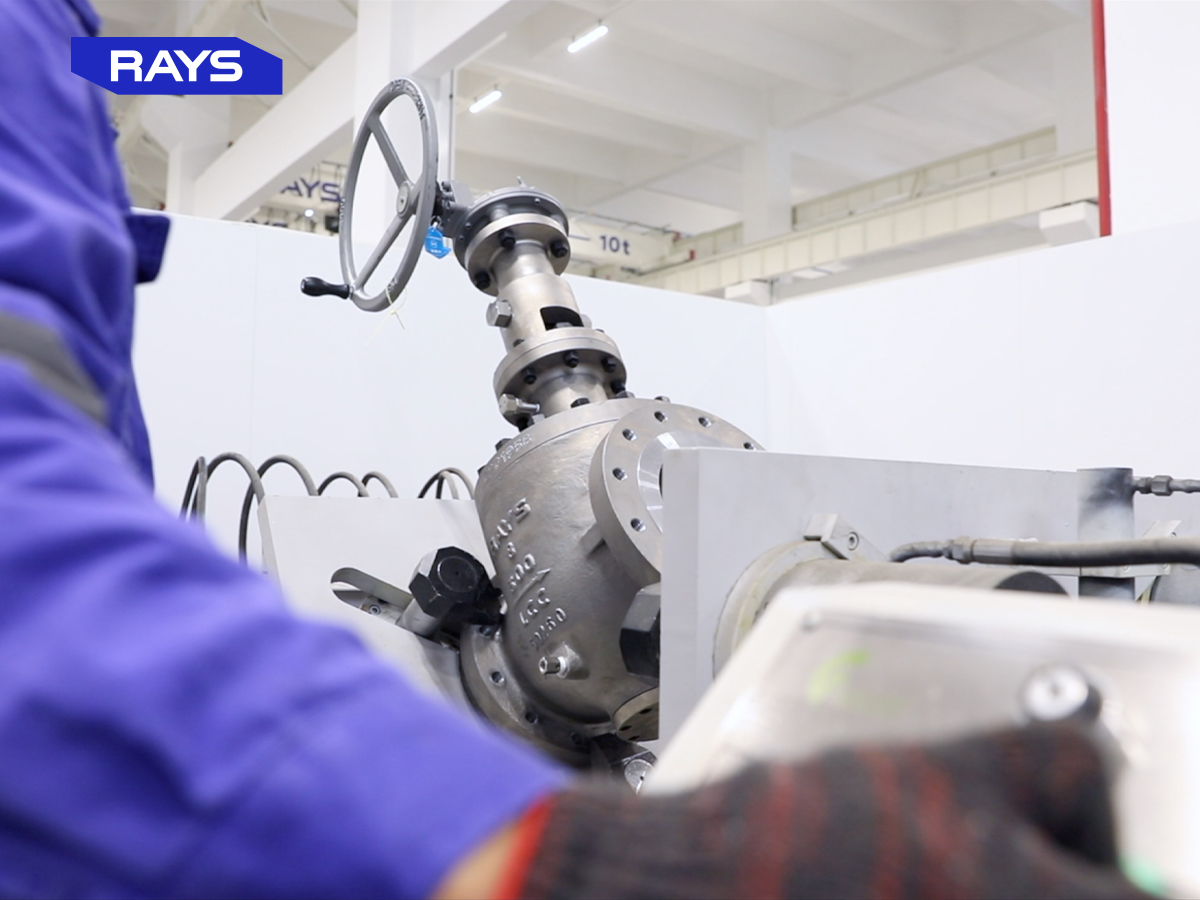
Verified zero leakage performance in accordance with ISO 5208-A
In addition:
Single-seat design helps mitigate cavity overpressure risks
Top-entry configuration enables easier in-line maintenance
|
From offshore gas transmission to petrochemical processing, the applications differ — but the requirement for stability remains the same.
These projects demonstrate that by controlling contact through structural design, sealing performance can be maintained in a predictable and reliable manner under complex operating conditions.